


At the northern edge of Haida Gwaii lies Dixon Entrance, a broad stretch of Pacific water separating the islands from Southeast Alaska. Open to the North Pacific in the west and connecting with Hecate Strait to the southeast, Dixon Entrance sits at the meeting point of powerful currents, complex underwater terrain and some of the Pacific Northwest’s most productive marine habitat.
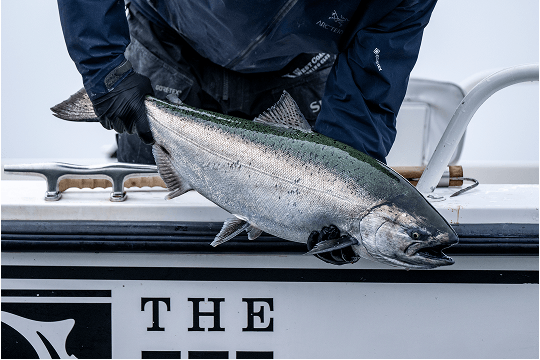
For anglers, that geography is significant. Migratory salmon move through these waters each season, while strong tidal flows and productive feeding areas support the baitfish and marine life they depend on.
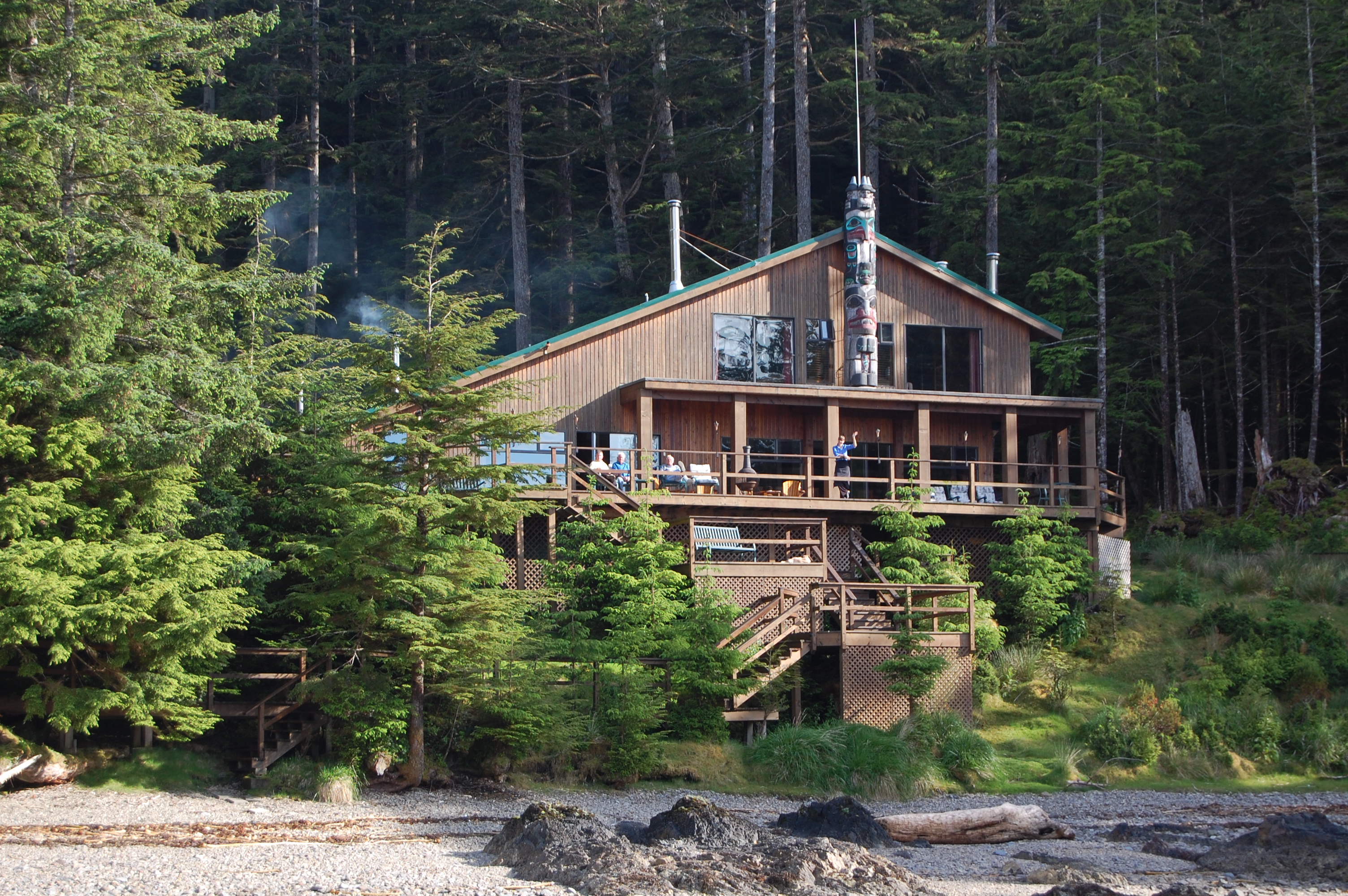
The West Coast Fishing Club's Clubhouse is located on Langara Island at the northern end of Haida Gwaii, placing guests within immediate reach of these legendary fishing grounds.
The productivity of Dixon Entrance begins with its connection to the open North Pacific.
Water moving through Dixon Entrance interacts with freshwater flowing from the mainland, strong tides and the varied seafloor surrounding northern Haida Gwaii. Seasonal upwelling, changing currents and tidal mixing all contribute to the biological productivity of the broader Haida Gwaii marine ecosystem.
Beneath the surface, the geography is equally dynamic. Dixon Entrance includes deep troughs exceeding 300 metres as well as much shallower features such as Learmonth Bank near its western entrance. As tides and currents move across these changes in depth, the resulting mixing helps move nutrients and marine life throughout the water column.
Those productive waters support the forage species salmon rely on, creating the type of feeding environment that has made northern Haida Gwaii synonymous with exceptional salmon fishing.
When you depart from The Clubhouse, these waters are quite literally on your doorstep, allowing more of your day to be spent fishing rather than travelling to the grounds.
Dixon Entrance is also an important migration corridor for Pacific salmon moving between offshore feeding grounds and rivers along the coast of British Columbia, Alaska and the Pacific Northwest.
Research has identified Dixon Entrance as part of the migration route used by salmon stocks moving through northern British Columbia and Southeast Alaska. Around Langara Island in particular, generations of local knowledge have documented significant concentrations of migratory salmon passing the northern end of Haida Gwaii.
At West Coast Fishing Club, experienced guides fish these waters aboard purpose-built Boston Whalers, adjusting locations, depths and tackle throughout the day according to tides, weather and where the fish are moving. Our detailed breakdown on salmon species in British Columbia explains how to best time your trip around peak runs.
One of the defining characteristics of fishing around northern Haida Gwaii is the underwater terrain.
Dixon Entrance combines deep channels with shallower banks, reefs, points and abrupt changes in depth. Learmonth Bank rises to approximately 50 metres near the western entrance, while parts of the central trough descend beyond 300 metres. To the southeast, the shallow Rose Spit Sill marks the transition toward Hecate Strait.
These features influence how water moves through the region. When currents encounter a bank, point or drop-off, water can be redirected or mixed, helping concentrate forage in particular areas.
For salmon anglers, those natural features matter because feeding fish rarely distribute themselves evenly across the ocean. Guides learn to read the relationship between tides, structure, bait and salmon movement, returning to productive locations as conditions change throughout the day.
Whether you are staying at The Clubhouse or enjoying the secluded sanctuary of The Outpost, our lodges grant immediate access to these geographical hot spots, eliminating hours of boat travel time so you can spend maximum time fishing.
The abundance of marine life surrounding Haida Gwaii also comes with a responsibility to protect it.
Dixon Entrance and the waters surrounding Haida Gwaii support ecologically and culturally significant marine ecosystems that have sustained communities for generations. Fisheries in the region are managed through regulations governing seasons, retention limits, fishing methods and conservation measures.
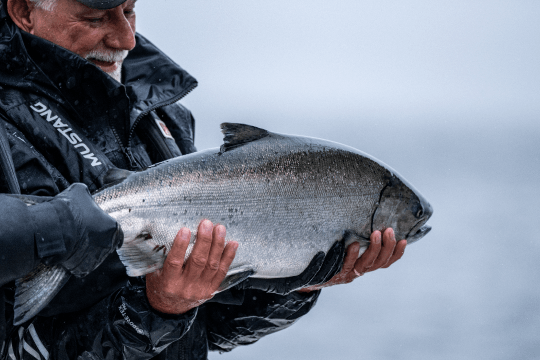
At West Coast Fishing Club, protecting these waters is central to our approach. Responsible angling practices, including the careful release of fish that will not be retained, help minimize impact while allowing guests to experience one of Canada's extraordinary marine environments.
The goal is simple: exceptional fishing today without losing sight of the generations who will fish these waters tomorrow.
Flying is the most convenient way to reach Haida Gwaii. Guests travelling with West Coast Fishing Club depart Vancouver aboard a private charter flight to Masset, Haida Gwaii. From Masset, guests transfer by helicopter directly to the lodge, turning the journey itself into part of the experience.
Dixon Entrance lies immediately north of Haida Gwaii, between northern British Columbia and Southeast Alaska. Its western end opens directly onto the North Pacific, while its southeastern waters connect with Hecate Strait.
You need a Pacific Tidal Waters Sport Fishing Licence issued by Fisheries and Oceans Canada (DFO), along with a Salmon Conservation Stamp if you plan to retain salmon. Licenses are purchased online prior to arrival, and guests must carry a printed copy while on the water.
For a beginner salmon angler, the essentials include a rod and reel suited to the fishing method, appropriate line and leader, barbless hooks, locally effective lures or bait, and a landing net.
When fishing with West Coast Fishing Club, guests don't need to bring their own fishing equipment. Rods, reels, tackle and foul-weather gear are provided, while guides select setups based on the species, location and conditions you'll be fishing.



Leave a Comment
Your email address will not be published. Your comment will be displayed once it is approved by the site admin.
Your email address will not be published.
Your comment will be displayed once it is approved by the site admin.